Pesto Crusted Salmon: Where A Childhood Memory Finds its Way Onto the Plate
Pesto is one of those things most kitchens don’t question. It’s built on repetition — basil, olive oil, garlic, pine nuts — and it works because it’s been done that way for so long.
Chef Rang didn’t set out to change it. She just didn’t follow it exactly.
Growing up in Rizal, going to church in Antipolo was part of the rhythm of the week. And just as familiar were the roadside stalls you’d pass on the way home. Cashews were always there. Not presented as anything special, not tied to a larger story. Just something you’d buy, something you’d eat without thinking too much about it.
Those kinds of memories don’t feel important at the time. But they stay in a way that’s hard to explain.
Years later, when she was building this dish in her kitchen in Las Vegas, that memory came back in a quiet, practical way. She wasn’t trying to reinterpret pesto or make a statement out of it. She was simply working through the flavors, and when it came time to choose the nut, cashews made more sense to her than anything else.
So she used them.
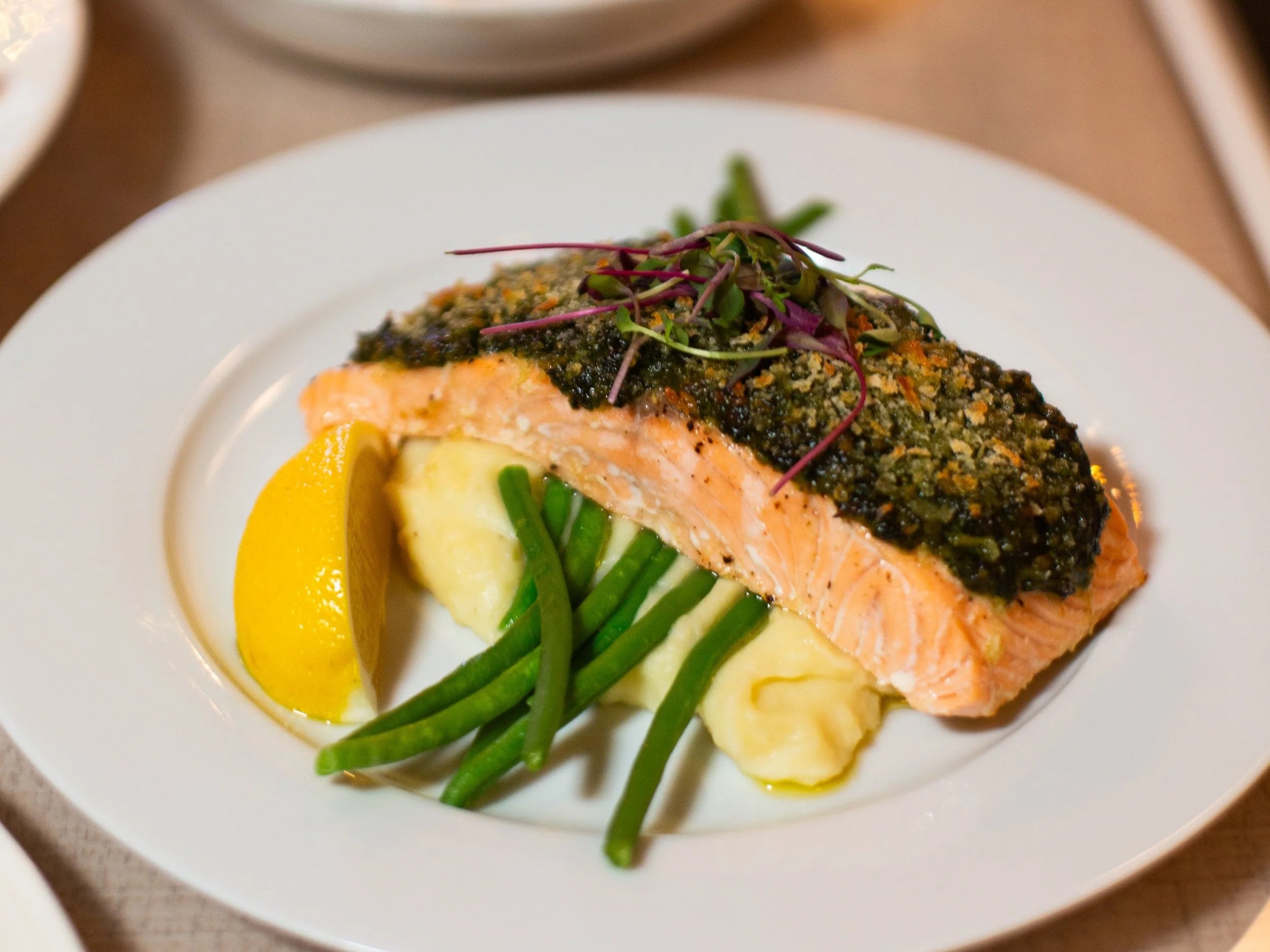
The rest of the dish stays grounded in what you’d expect. Herbs and olive oil blended into a crust that sits over the salmon. The fish is cooked with care, nothing overworked, nothing unnecessary. Underneath, mashed potatoes — familiar, steady, there to support rather than compete.
But the pesto changes in a way that’s subtle until you pay attention. The cashews soften it. They take away the sharper edge you might expect and replace it with something rounder, more settled. It doesn’t sit on top of the salmon as a separate layer. It moves with it.
It’s still clearly rooted in an Italian structure. Nothing about that is lost.
But it carries something else alongside it — not loudly, not as a point to prove, but as something that belongs there. A small memory from Rizal, from Antipolo, from a time when food wasn’t something to analyze, just something to enjoy.
At Rang’s, this is what tradition reimagined actually looks like.
Not taking something apart and rebuilding it to be different.
Just letting your own history shape it in a way that feels honest — and trusting that it will make sense on the plate.
Book your table this week.