The Flavor Thread: How Aligue Connects Three Cultures
Before it ever hits the plate, aligue exists in memory. In Filipino homes, it lives in small jars tucked in the fridge, stirred into garlic rice on slow Sundays or spooned over pancit for birthdays and reunions. It’s not fancy, it’s familiar, and yet, there’s nothing ordinary about it.
Golden-orange, briny, and unapologetically rich, aligue is one of those ingredients that transforms a dish with very little. It needs no elevation, no reinvention. It already carries a legacy of flavor.
At Rang’s Cocina Moderne, aligue is an ingredient that holds the weight of tradition while making room for something more. In Chef Rang’s kitchen, it becomes not just a nod to the Philippines, but a bridge across her culinary heritage.
A LOVE LETTER IN FLAVOR
There’s a moment, right before the sauce comes together, when the aligue hits the pan. It melts slowly into the aromatics; garlic, shallot, a whisper of citrus. The kitchen fills with a scent that feels both bold and nostalgic, and just like that, a new dish begins to take shape from something deeply old.
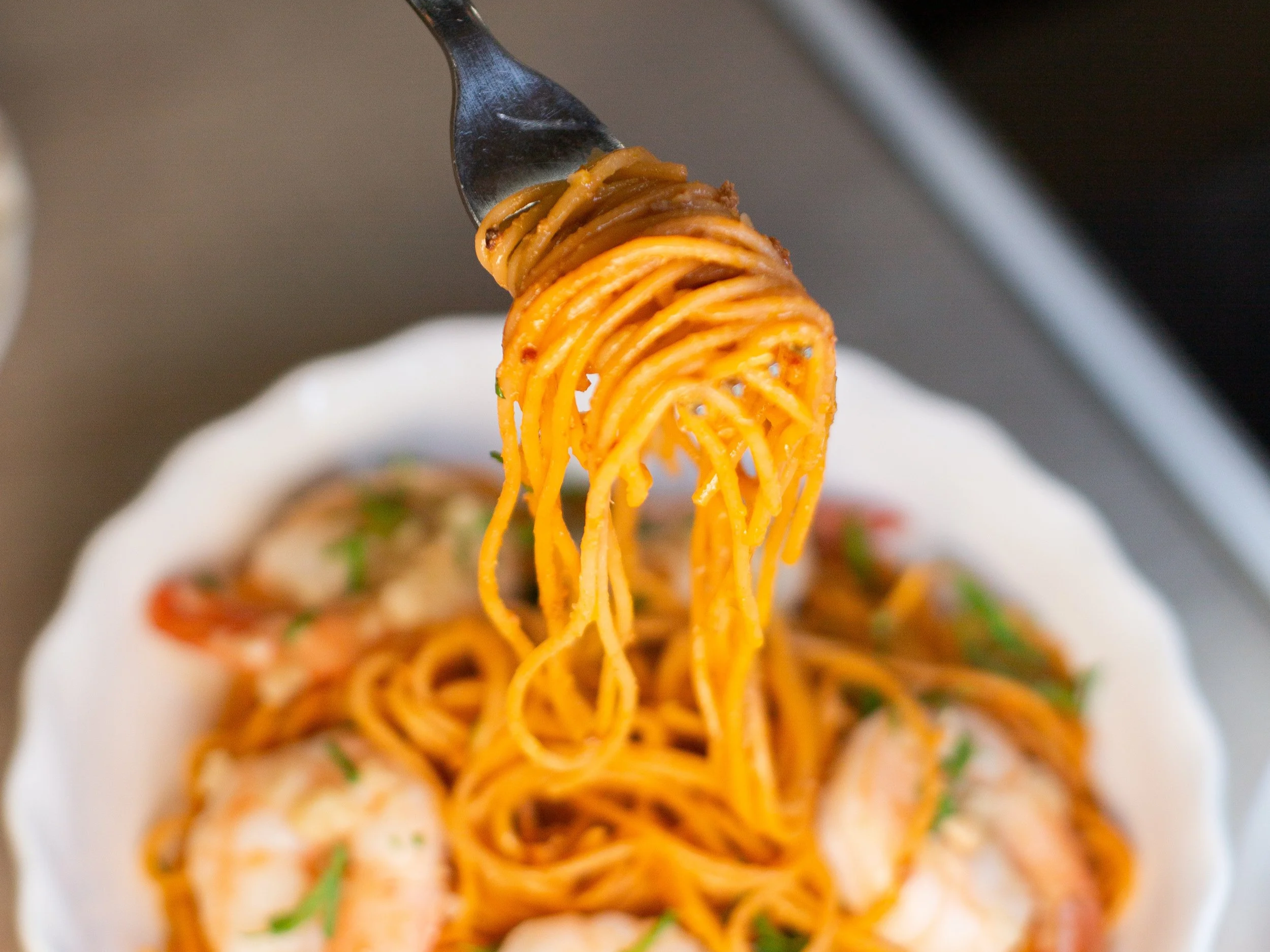
In Filipino cuisine, aligue isn’t a garnish. It’s a base folded into rice, stirred into stews, built up into something that holds its own. Chef Rang channels that same instinct into her Aligue Pasta, letting it lead the sauce while resisting the urge to complicate it.
But there’s more beneath the surface.
If you’ve tasted the sea-forward sauces of southern Italy, or the layered broths of Spanish coastal towns, there’s a thread you’ll recognize. Maybe not identical in technique, but kindred in spirit.
In Sicilian kitchens, sea urchin (ricci di mare) or anchovy is often the backbone of a dish, adding depth, not dominance. In Valencian or Catalan cooking, seafood stock is coaxed from shells and scraps over hours, becoming the soul of a stew like arroz caldoso.
Here, in Chef Rang’s dish, the aligue plays that same role. Not to mimic, but to speak. It becomes the line connecting three coastlines: the Philippines, Italy, and Spain, each with their own respect for the ocean, each with their own story told through flavor.
It’s not fusion. It’s a conversation, layered, lived-in, and true.
WHY IT BELONGS AT RANG’S
Rang’s Cocina Moderne is not a restaurant built on novelty. It’s a restaurant built on memory, culture, and mastery.
The Aligue Pasta belongs here because it reinvents tradition, but because it honors multiple ones — Filipino, Spanish, and Italian — through a singular, personal lens. This is the type of dish you can’t quite label, but you can feel.
It simply arrives, familiar to some, new to others. And makes a quiet case for why ingredients like aligue deserve a place on the table.