Inside Rang’s Cocina Moderne: How Chef Rang Tan Built One of Las Vegas’ Most Distinctive Chef-Driven Restaurants
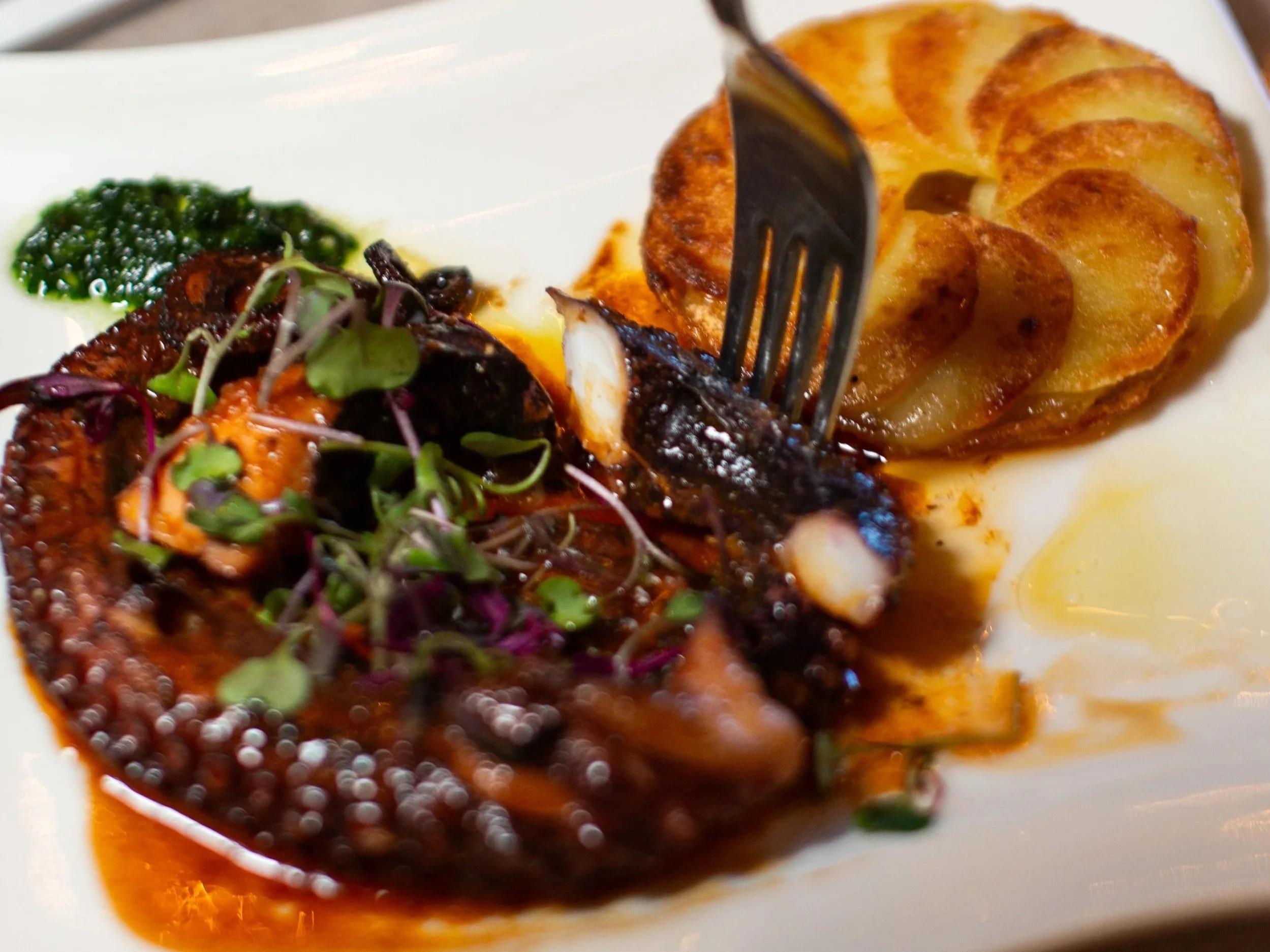
Rang’s Cocina Moderne sits inside a shopping center on West Charleston Boulevard, several miles from the oversized dining rooms and illuminated marquees of the Las Vegas Strip. From the outside, there is little indication of how much geography is contained within its menu. Dinner may begin with Spanish-style pulpo or beef tongue cooked with garlic, olive oil and soy, then move toward Filipino bistek, pasta coated in crab fat, or Chilean sea bass finished with brown butter, lemon and coconut. The influences stretch across countries and culinary traditions, yet the meal never feels like a tour assembled from unrelated stops. It follows the instincts of one chef whose upbringing taught her to understand these ingredients as parts of the same story.
That chef is Rachelle “Rang” Tan, who owns the family-run restaurant with her husband, Benedict Tan. Her Chinese, Filipino and Spanish heritage, the culinary foundation she developed in Manila and her long affection for Italian cooking all inform the food at Rang’s. The restaurant describes its cuisine as Spanish and Italian dishes infused with Asian flavors, although that concise explanation only begins to account for what happens on the plate. Chef Rang’s cooking is personal enough that it resists an easy category; its logic comes from the way she remembers food, the techniques she has carried through different stages of her life and the flavors she trusts to belong together.
This is what makes Rang’s a genuinely chef-driven restaurant. The term is frequently used to describe any menu bearing a recognizable chef’s name, but its deeper meaning has less to do with branding than authorship. At Rang’s Cocina Moderne, the restaurant’s identity cannot be separated from Chef Rang’s background, because the menu was built outward from her experiences rather than inward from a marketable category. Each dish reflects a decision she made about what to preserve, what to reinterpret and which traditions could meet naturally without losing their individual character.
A Las Vegas Restaurant Rooted in Chef Rang’s Personal History
Long before Rang’s Cocina Moderne opened in Las Vegas, Chef Rang had already begun developing the approach that would eventually define it. She grew up with the flavors of a culturally varied family, where Chinese, Filipino and Spanish influences belonged to daily life rather than existing as separate culinary subjects. She later established a catering business in Manila, gaining the kind of practical education that comes from cooking for other people at scale while preserving the warmth and generosity expected of food served at celebrations and family gatherings.
Catering requires a chef to think beyond the isolated beauty of an individual plate. The food must hold its character through preparation, transportation and service; a menu must offer enough familiarity to welcome a large group while retaining enough personality to feel memorable. It also teaches the relationship between food and occasion, because the meal is rarely the only reason people have gathered. Birthdays, weddings, anniversaries and family milestones unfold around the table, placing the cook in the position of shaping an experience without becoming the center of it.That understanding followed Chef Rang to Las Vegas. Although Rang’s is more intimate than a large catered gathering, the cooking carries the same awareness that a restaurant meal exists within a guest’s larger evening. Some diners arrive already familiar with Filipino ingredients such as aligue, bagoong or bistek, while others encounter them for the first time. Some recognize the Spanish references immediately, and others are drawn toward the Italian pastas or seafood preparations. Chef Rang’s task is to create a menu in which each of those guests can find an entry point without flattening the food into something generic.The result is a restaurant grounded in hospitality as much as technique. Las Vegas Weekly described Rang’s as a welcoming, family-run restaurant where guests are encouraged to linger and explore flavors they may not encounter elsewhere in the city. The publication also noted that Chef Rang and Benedict moved from the Philippines to Las Vegas during the pandemic before opening the restaurant, bringing a deeply personal body of culinary experience into a new dining community.
Why the Menu at Rang’s Does Not Fit Neatly Into One Cuisine
Restaurants are often asked to define themselves in a few recognizable words. Italian. Spanish. Filipino. Contemporary. Fine dining. Casual neighborhood restaurant. These descriptions help diners understand what they are considering, although they can become limiting when a chef’s experience crosses several culinary traditions.At Rang’s, Filipino, Spanish, Chinese and Italian influences appear in different proportions depending on the dish. They are connected through recurring ingredients and techniques: garlic cooked in olive oil, onions softened until sweet, soy used for seasoning and depth, citrus introduced to cut through richness, seafood paired with concentrated sauces, and tougher cuts of meat given the time necessary to become tender. The connections are practical rather than theoretical, grounded in the way the ingredients behave when they meet in a pan.The menu’s range becomes clearer when several dishes are ordered together. Pulpo places braised octopus beside potatoes and a Galician-style sauce, preserving a recognizable Spanish framework. Lengua Salpicao approaches beef tongue through the Filipino tradition of salpicao, using garlic, olive oil and soy to build a sauce that is savory, aromatic and particularly suited to being gathered up with pieces of bread. Aligue with Garlic Shrimp draws its richness from crab fat, a distinctly Filipino ingredient, then handles it within the structure of an Italian pasta prepared with olive oil and garlic. The Chilean Sea Bass begins with brown butter, garlic and lemon before coconut broadens the sauce and quietly redirects it toward Southeast Asia.
Each dish is understandable on its own, yet the menu’s full identity emerges through the relationships among them. Garlic moves from Spanish seafood preparations to Filipino salpicao and Italian pasta. Olive oil provides the foundation for both Mediterranean and Filipino dishes shaped by centuries of Spanish influence. Soy gives richness to beef and tongue without turning the meal toward a broad, indistinct idea of Asian fusion. Coconut appears where its sweetness and body can alter a European sauce without obscuring the ingredient beneath it.The menu therefore reads less like a collection of cuisines and more like Chef Rang’s culinary biography. She is not borrowing isolated flavors to make a dish appear surprising. She is cooking from traditions that have coexisted throughout her life, drawing upon them according to what the principal ingredient needs and what she wants the finished dish to communicate.
Bistek and the Question of What Should Be Preserved
Bistek is one of the clearest expressions of how Chef Rang approaches a familiar Filipino dish. In many Filipino households, bistek Tagalog is made by marinating thinly sliced beef in soy sauce and citrus, cooking it with onions, and serving it alongside rice capable of absorbing every part of the sauce. Its flavor is direct and recognizable: salty, acidic, savory and softened by the sweetness of the onions.At Rang’s Cocina Moderne, the same flavor architecture is expressed through a USDA Prime New York strip steak served with a citrus-soy glaze and onions. The restaurant setting changes the cut of beef and the composition of the plate, while the elements that make bistek emotionally and culturally legible remain intact. The soy and citrus still define the dish, the onions remain essential rather than decorative, and rice provides the familiar conclusion to each bite.
The distinction matters because reinterpretation can easily become an exercise in replacing everything that made a dish meaningful. Chef Rang’s version demonstrates a more measured approach. She considers which elements belong to the dish’s identity and which can be adjusted to reflect her technique, the quality of the ingredients available to her and the experience she wants to create in the dining room.For a Filipino guest, the bistek may evoke a dish eaten many times before, even though its presentation and cut of beef belong specifically to Rang’s. For someone encountering bistek for the first time, it provides an introduction that is polished without being stripped of the soy, citrus and onions that give the preparation its character. Both diners receive the same plate, although the meaning it carries may be entirely different.
Aligue Pasta and the Possibilities of a Shared Culinary Language
Aligue Pasta offers another way to understand Chef Rang’s menu. Aligue refers to the intensely savory fat and roe associated with small shore crabs, an ingredient valued in Filipino cooking for the briny richness it can bring to rice, sauces and seafood dishes. It is powerful enough to dominate a plate when handled without restraint, yet in careful proportions it provides an almost luxurious depth.At Rang’s, aligue becomes the center of a pasta with garlic shrimp, olive oil and garlic. The combination works because pasta is exceptionally receptive to concentrated seafood flavors. Italian coastal cooking has long paired noodles with ingredients such as anchovies, shellfish, bottarga and sea urchin, using the starch released by pasta and the movement of the pan to turn fat, cooking water and seasoning into a cohesive sauce.
Aligue enters that culinary structure without surrendering its Filipino identity.The pasta does not treat crab fat as a novelty placed over a familiar Italian dish. Aligue is responsible for the sauce’s central flavor, while the noodles provide a form capable of carrying it evenly through the meal. Garlic supports its savoriness, olive oil gives the sauce movement and shrimp reinforces the relationship to the sea. Las Vegas Weekly called the pasta a destination dish, while the restaurant continues to identify it among its must-try favorites. This is the kind of cultural intersection that feels natural at Rang’s because it begins with a technical understanding of both traditions. Chef Rang recognizes the role aligue plays in Filipino cooking and the way Italian pasta sauces are constructed; she does not need to diminish either one to bring them together. The finished dish carries both histories while belonging unmistakably to her restaurant.
Technique Is What Holds the Restaurant Together
A menu containing Filipino bistek, Galician-inspired octopus, Italian pasta and seafood with coconut could easily feel scattered in the hands of a chef more interested in variety than coherence. At Rang’s, technique creates continuity. The dishes share an attention to the development of aromatics, the management of richness and the use of acidity to keep heavier ingredients from becoming exhausting.Garlic is one of the clearest threads. In the Lengua Salpicao, it meets olive oil and soy, giving the sauce enough aromatic depth to stand beside the richness of the beef tongue. In the Aligue Pasta, garlic supports crab fat without overtaking its clean brininess. In the Chilean Sea Bass, it sits between brown butter, lemon and coconut, helping ingredients from different culinary traditions settle into a single sauce. These preparations use garlic differently, but they all depend on the chef understanding its timing, temperature and purpose.
The same is true of slow cooking. Beef tongue and beef cheek require patience before they reveal the textures that make them valuable. Octopus must be treated carefully enough to become tender while retaining structure. A sauce must reduce sufficiently to concentrate flavor without becoming heavy or overly salty. None of these decisions is especially theatrical, and most of them happen before guests enter the dining room, but they determine whether an ambitious menu feels thoughtful or merely complicated.Chef Rang’s culinary influences remain coherent because she approaches them through this foundation of technique. Heritage determines the ingredients and memories available to her; experience determines how they are handled. The menu’s originality comes from the relationship between those two sources rather than from an effort to create unusual combinations for their own sake.
The Difference Between a Concept and a Point of View
Many restaurants begin with a concept developed to meet an identifiable demand. The menu, dining room and branding are then built to support that concept, with dishes selected according to how easily they fit the chosen category. There is nothing inherently impersonal about this process, and many excellent restaurants are created this way. Rang’s began somewhere more intimate.Chef Rang’s own palate came first. Her experiences in the Philippines, her Chinese, Filipino and Spanish heritage, her training and catering work in Manila, and her relationship with Italian cooking provided the restaurant’s foundation. The concept followed from the food she was already compelled to cook. This is why removing Chef Rang from the story would leave little of the restaurant intact; its defining quality is the accumulated perspective she brings to each decision.That perspective can also be seen in the dishes Chef Rang chooses to leave relatively traditional.
A chef-driven restaurant does not require every plate to undergo visible reinvention. Sometimes authorship is expressed through restraint, including the judgment to recognize when a classic preparation already possesses the balance it needs. At other times, a personal memory can open a familiar dish in a new direction, as when Chef Rang has used cashews associated with childhood visits to Antipolo in place of pine nuts within pesto. The significance lies in the reasoning behind the decision, whether it leads toward preservation or adaptation.A point of view also creates boundaries. Chef Rang’s menu may cross several cuisines, although it does not attempt to represent every possible version of them. The restaurant reflects what she knows, remembers and finds compelling. That selectivity gives the menu definition, allowing guests to understand the chef more clearly with each course.
Cooking for Recognition and Cooking for Guests
Rang’s Cocina Moderne was included in the Las Vegas Review-Journal’s Top 100 Restaurants in Las Vegas for 2026, placing the restaurant within a dining landscape that continues to gain national attention. The recognition acknowledged the way Chef Rang’s menu braids her Filipino, Spanish and Chinese heritage with Italian influences and the culinary foundation she developed in Manila. For an independent restaurant, recognition of that kind carries real value. It introduces the food to diners who may never have driven past the West Charleston shopping center where Rang’s is located, and it places Chef Rang’s work within a broader record of what is happening in Las Vegas dining. It also affirms that a small, personal restaurant can hold its place beside larger and more heavily publicized establishments without imitating them.Recognition, however, enters the restaurant after the essential work has already been done. The menu existed before the list. Guests had already ordered the Aligue Pasta, returned for the Bistek, recommended the Lengua Salpicao and brought friends into the dining room.
A critic can document why a restaurant matters at a particular moment, but its character is formed through the repeated exchange between the kitchen and the people who choose to eat there.Cooking for guests requires a different type of attention from cooking for recognition. It asks whether the person sitting at the table understands what makes a dish special, even when the ingredient is unfamiliar. It asks whether a returning diner receives the care that made the first visit memorable, and whether someone celebrating an important occasion feels as welcome as the guest who stopped in for an ordinary Tuesday dinner.
Awards may widen the audience, but hospitality determines what happens when that audience arrives.At Rang’s, the distinction is visible in the intimacy of the experience. Chef Rang and Benedict are not distant names attached to the restaurant; their presence has helped establish the warmth noted by local coverage and remembered by guests. The food may carry a broad cultural history, but the service remains personal enough that the evening feels closer to being welcomed into someone’s home than moving through a formal culinary exhibition.
How Rang’s Contributes to the Las Vegas Dining Story
Las Vegas is frequently introduced through restaurants designed for spectacle, and the city remains exceptionally capable of delivering that experience. Some of its most revealing meals, however, are found in smaller dining rooms where chefs have enough independence to cook from personal history. These restaurants give the city a culinary identity that extends beyond imported names and resort-scale concepts, showing how migration, memory and neighborhood communities continue to shape what Las Vegas eats.Rang’s Cocina Moderne belongs to this part of the city. Its West Charleston location places it beyond the Strip while remaining close enough for visitors to include in a broader exploration of Las Vegas dining. The restaurant offers something increasingly valuable in a city with almost limitless options: a meal that could not be reproduced simply by transferring recipes, décor and operating procedures to another market.The food depends on Chef Rang’s specific history.
The Bistek carries her understanding of Filipino comfort and restaurant technique. The Aligue Pasta reflects her ability to recognize a shared language between Filipino seafood and Italian pasta. Lengua Salpicao draws Spanish, Filipino and Chinese influences into a dish held together by garlic, olive oil and soy. The sea bass demonstrates how European sauce technique and coconut can meet around a carefully cooked piece of fish. Each preparation reveals another part of the same chef rather than another attempt to expand the restaurant’s category.That sense of authorship is what makes Rang’s distinctive within the Las Vegas restaurant community. The menu does not ask guests to choose between Filipino, Spanish, Chinese or Italian food. It allows them to experience how those influences have lived together in Chef Rang’s life and how they continue to inform the way she cooks today.
A Restaurant That Could Only Have Come From Chef Rang
The strongest chef-driven restaurants offer more than technical skill or an attractive collection of dishes. They allow diners to encounter a perspective that has been formed over time, through family meals, professional experience, cultural inheritance and the endless repetition required to understand how ingredients behave.Rang’s Cocina Moderne is inseparable from that process. Chef Rang’s food carries the Philippines and Manila, her Chinese, Filipino and Spanish heritage, her appreciation for Italian cooking and the experience of building a new life in Las Vegas. Those influences are visible in the menu, although they are felt most clearly in the confidence with which she brings them together.
Nothing about the restaurant suggests that a chef must abandon tradition to create something personal. Chef Rang treats tradition as living knowledge, capable of remaining intact where it serves the dish and evolving where another ingredient, memory or technique can deepen it. The result is food that feels recognizable without being predictable and contemporary without losing the histories beneath it.For diners searching for a chef-driven restaurant in Las Vegas, Rang’s offers the quality that matters most: a menu with a clear and unmistakable author. The restaurant’s story is Chef Rang’s story, expressed through crab fat and pasta, soy and citrus, garlic and olive oil, coconut and brown butter, carefully braised meats and seafood cooked with restraint. Each plate carries part of the path that brought her to Las Vegas, while every service gives that story another opportunity to be shared around the table.Tradition Reimagined. Flavor Redefined.
Frequently Asked Questions About Rang’s Cocina Moderne
What type of food does Rang’s Cocina Moderne serve?
Rang’s Cocina Moderne serves Spanish and Italian dishes shaped by Filipino, Chinese and broader Asian influences. Chef Rang Tan’s personal heritage and culinary experience guide a menu that includes Filipino bistek, aligue pasta, Spanish-inspired pulpo, lengua salpicao and seafood preparations incorporating ingredients such as coconut, soy, citrus, garlic and olive oil.
Is Rang’s Cocina Moderne chef-owned?
Yes. Rang’s Cocina Moderne is owned by Chef Rachelle “Rang” Tan and her husband, Benedict Tan. Chef Rang leads the restaurant’s culinary direction, drawing from her Chinese, Filipino and Spanish heritage, Italian influences and culinary background in Manila.
Where is Rang’s Cocina Moderne located?
Rang’s Cocina Moderne is located at 5900 W. Charleston Blvd., Suite 11, Las Vegas, NV 89146, west of the Las Vegas Strip. The restaurant is open for dinner from 5 to 9 p.m. Tuesday through Sunday and is closed on Mondays.
What are some signature dishes at Rang’s Cocina Moderne?
Current must-try dishes include the Bistek with USDA Prime New York strip, Pulpo with potatoes and Galician sauce, Aligue with Garlic Shrimp Pasta, Chilean Sea Bass with brown butter, garlic, lemon and coconut sauce, and Lengua Salpicao prepared with garlic and olive oil.
Why is Rang’s considered a chef-driven Las Vegas restaurant?
Rang’s is chef-driven because the restaurant’s identity, menu and culinary philosophy are directly shaped by Chef Rang Tan’s life and personal history. Its Filipino, Chinese, Spanish and Italian influences are connected through her own palate, memories and technique rather than through a standardized restaurant concept.
