How one humble ingredient reveals the philosophies behind Filipino, Spanish, and Italian cooking
Before a pan ever meets a piece of fish or a pot begins simmering with sauce, there is usually a quieter moment in the kitchen. A cutting board fills with onion skins, herbs are picked from their stems, olive oil begins to warm, and someone reaches for a handful of garlic.
It is one of the most ordinary ingredients in the world, found in nearly every pantry and every cuisine. It rarely earns top billing on a menu, yet it quietly shapes countless dishes before the main ingredient ever enters the pan. More importantly, garlic often reveals far more about a cuisine than the recipes themselves. The way a cook slices it, the temperature at which it cooks, the fat it meets, and the moment it enters a dish all speak to generations of culinary tradition.
Filipino, Spanish, and Italian cooking all rely heavily on garlic, but they do not use it interchangeably. The ingredient may be shared, yet each culture has developed its own relationship with it, using the same clove to build entirely different foundations of flavor. Understanding those differences offers a fascinating glimpse into the philosophies that define each cuisine and, perhaps more importantly, explains why Chef Rang Tan has always felt so naturally at home cooking across all three.
At Rang's Cocina Moderne in Las Vegas, garlic is rarely the ingredient guests notice first. It was never meant to be. Instead, it serves the role it has played in great kitchens for centuries: creating depth, balance, and character before the rest of the dish has a chance to speak.
A Foundation Built One Layer at a Time
Professional chefs often describe cooking as building layers rather than adding ingredients. Every decision influences the next one, and nowhere is that more apparent than in the first few minutes over the stove.
Garlic illustrates this beautifully because it is remarkably responsive. Cook it too briefly and it remains sharp, almost spicy. Leave it over gentle heat and it becomes mellow, sweet, and aromatic. Brown it further and it develops rich, nutty notes that can completely change the direction of a dish. Push it too far and its bitterness dominates everything around it.
Few ingredients demonstrate the importance of timing so clearly.
For experienced cooks, garlic is less about following a recipe than understanding intention. The same clove can produce dramatically different results depending on what the chef hopes to achieve. That understanding has shaped kitchens across the world, allowing cultures separated by oceans to develop entirely different identities while beginning from the same simple ingredient.
In Filipino Cooking, Garlic Signals That the Meal Has Begun
Walk into a Filipino home as dinner is being prepared, and one of the first aromas you'll notice is garlic meeting hot oil.
The technique known as ginisa forms the foundation of countless Filipino dishes. While often translated simply as sautéing garlic and onions, ginisa represents far more than a cooking method. It is the beginning of flavor itself.
Garlic is usually introduced first, allowing it to brown slightly before onions soften beside it. That deeper caramelization distinguishes Filipino cooking from many European techniques, creating savory notes that stand comfortably alongside ingredients such as soy sauce, vinegar, shrimp paste, tomatoes, fish sauce, or coconut milk. The garlic is expected to contribute its own character rather than quietly disappear.
This approach reflects the practical nature of Filipino home cooking. Meals developed from what families had available, balancing bold pantry staples with fresh vegetables, seafood, and meats. Garlic became one of the few ingredients capable of tying those flavors together, adding warmth and complexity without requiring expensive ingredients or elaborate preparation.
Its importance extends well beyond taste.
For many Filipinos, the aroma of garlic browning in oil announces that dinner is underway. It carries memories of family kitchens, conversations beginning around the dining table, and recipes prepared so often they no longer require measuring cups or written instructions. Like rice steaming nearby, it is part of the rhythm of everyday life.
The technique appears across an extraordinary range of dishes, from adobo and bistek to ginisang munggo, pancit, and countless regional specialties. Although the ingredients change, the principle remains remarkably consistent: build a strong foundation before adding everything else.
Spain Teaches Garlic Patience
Travel west across the world and garlic appears again, though its purpose begins to shift.
Spanish cooking often introduces garlic through sofrito, a preparation that asks cooks to slow down. While recipes vary from region to region, the philosophy remains remarkably consistent. Garlic, onions, olive oil, and frequently tomatoes are cooked gently over time until each ingredient softens into the next.
Rather than encouraging garlic to stand apart, Spanish cooking encourages it to become part of something larger.
Heat stays moderate. Olive oil acts as both cooking medium and flavor. Onions release their sweetness gradually. Tomatoes lose their brightness and become concentrated. Garlic melts almost invisibly into the mixture, contributing depth without demanding attention.
This patience reflects much of Spain's culinary identity.
Many iconic Spanish dishes ask cooks to trust time more than technique. Whether preparing a rich seafood stew, a slow-cooked braise, or a traditional rice dish, the goal is rarely speed. Instead, flavors are encouraged to develop gradually until individual ingredients become inseparable from one another.
Garlic serves as the quiet architect beneath those flavors.
It is no coincidence that Spanish cuisine has influenced so many others, including Filipino cooking. More than three centuries of Spanish presence in the Philippines introduced new ingredients, cooking methods, and culinary traditions that eventually blended with existing local techniques. Tomatoes, olive oil, paprika, and countless preparations became part of Filipino kitchens, adapting naturally to local ingredients rather than replacing them.
Garlic found itself comfortably at the center of both worlds.
Italy Uses Garlic With Remarkable Restraint
If Filipino cooking celebrates garlic's boldness and Spanish cooking embraces its patience, Italian cuisine often demonstrates its restraint.
Many of Italy's most celebrated dishes ask garlic to perfume rather than dominate.
A simple plate of spaghetti aglio e olio illustrates this beautifully. Garlic is sliced thinly or left whole before gently warming in olive oil. The goal is not browning but fragrance. As soon as the oil captures its aroma, the garlic has largely accomplished its purpose.
In some regional preparations, the cloves are even removed before serving.
To cooks unfamiliar with Italian technique, this can seem surprising. Why remove an ingredient after taking the time to prepare it?
Because Italian cooking often values balance over intensity.
The garlic has already done its work. Its oils have infused the olive oil, creating a delicate aromatic foundation that allows pasta, seafood, herbs, and cheese to remain distinct rather than competing with one another.
That philosophy extends throughout much of Italian cuisine. Great ingredients are trusted to carry their own weight. Fresh tomatoes taste like tomatoes. Olive oil tastes unmistakably of olives. Seafood remains clean and recognizable. Garlic supports rather than overshadows.
It is an approach built on confidence rather than complexity.
The Ingredient Never Changed. The Philosophy Did.
Looking across these three culinary traditions reveals something fascinating.
The ingredient itself never changed.
The garlic harvested from a field in California shares the same essential characteristics whether it finds its way into a Filipino stew, a Spanish seafood rice, or an Italian pasta. What changes is the cook's intention.
Filipino cuisine asks garlic to contribute richness and depth from the very beginning.
Spanish cuisine invites it to slowly disappear into larger compositions.
Italian cuisine often encourages it to leave behind only its perfume.
The distinction may seem subtle, but it reveals one of the most important truths in cooking.
Ingredients do not define cuisine.
Technique does.
The order in which ingredients are added. The temperature of the pan. The type of fat being used. The amount of time something is allowed to cook. These decisions shape flavor long before seasoning is adjusted or garnishes are added.
Two chefs can begin with identical ingredients and create completely different experiences because they understand those decisions differently.
A Chef Raised Between Culinary Traditions
For Chef Rang Tan, these differences were never academic.
Growing up surrounded by Chinese, Filipino, and Spanish influences meant understanding from an early age that the same ingredient could behave differently depending on the dish being prepared. Garlic was not simply garlic. It carried different responsibilities depending on the story the food was trying to tell.
Sometimes it needed to become crisp and deeply savory.
Sometimes it needed to soften gently alongside onions.
Sometimes it needed to perfume olive oil before quietly stepping aside.
Those experiences naturally shaped the way Chef Rang approaches cooking today.
Rather than treating cuisines as separate disciplines, she recognizes the shared principles that connect them. The menu at Rang's Cocina Moderne reflects those connections not because different cultures are being forced together, but because they have always shared common ground. Ingredients travel. Techniques evolve. Families adapt recipes over generations. The borders between cuisines often become far more fluid than they appear.
That perspective allows each dish to remain respectful of its origins while still feeling deeply personal.
Technique Lives Longer Than Recipes
It is easy to think recipes preserve culinary traditions.
In reality, techniques often survive much longer.
Recipes change with available ingredients, regional tastes, and family preferences. Quantities are adjusted. Proteins are substituted. Vegetables come and go with the seasons.
Technique remains remarkably consistent.
A cook who understands how garlic should behave in a pan can build countless dishes without relying on written instructions. They understand what aroma signals the right moment to add onions. They recognize when garlic has reached sweetness instead of bitterness. They know how much heat a seafood dish can tolerate before delicate flavors begin disappearing.
This knowledge cannot always be measured with timers or recipes. It develops through repetition, observation, and years spent paying attention.
It is also one of the quiet distinctions that separates cooking from simply following directions.
Garlic Across the Menu at Rang's Cocina Moderne
That philosophy quietly appears throughout Chef Rang's menu.
The Carbonara remains intentionally restrained because its balance depends on allowing each ingredient to contribute exactly what it should. Garlic plays a supporting role, complementing the richness of guanciale and pecorino without distracting from the integrity of one of Italy's most enduring dishes.
The Chorizo Bolognese begins much earlier than diners ever see, with aromatics patiently developing before hours of slow cooking transform individual ingredients into a deeply layered sauce. By the time it reaches the table, the garlic is no longer identifiable on its own. It has become part of the sauce's foundation.
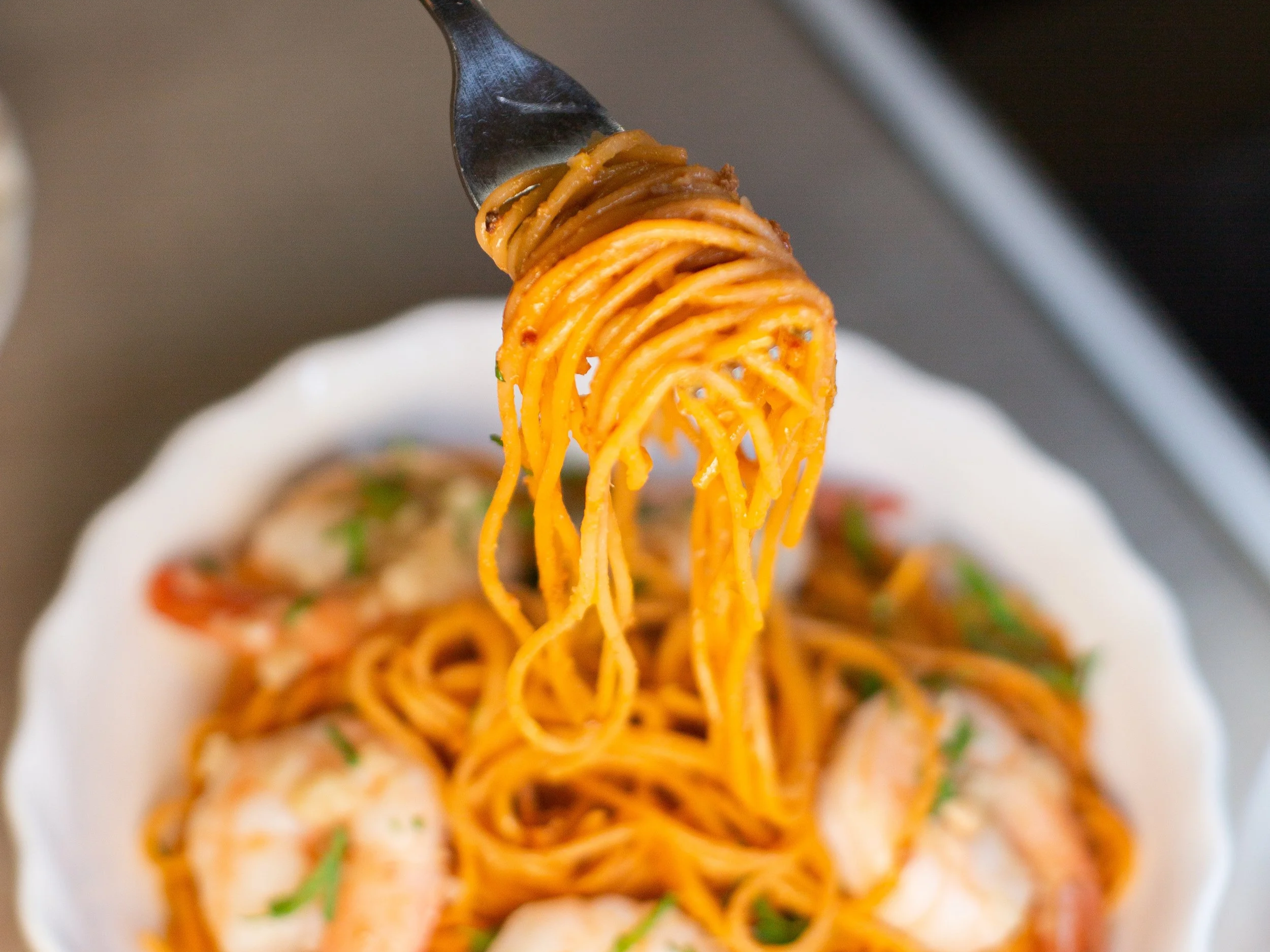
The Aligue Pasta takes a similarly thoughtful approach. Crab fat carries extraordinary richness, requiring careful balance so every bite remains elegant rather than overwhelming. Garlic provides that balance, introducing aromatic sweetness that supports the natural intensity of the seafood without competing against it.
Even the Pesto Crusted Salmon tells its own story. While the pesto reflects Italian tradition, Chef Rang's use of roasted cashews recalls childhood Sundays spent in Antipolo after church, where roadside vendors sold freshly roasted nuts that became part of family ritual. The garlic woven through the pesto connects those memories to classic Italian technique, creating something that feels both familiar and uniquely her own.
Across the menu, garlic rarely asks to be noticed. It simply does its work.
The Quiet Lessons Hidden in a Single Clove
Garlic has earned its place in kitchens around the world not because it is dramatic, but because it is dependable. It teaches patience when patience is required, restraint when restraint serves the dish, and confidence when simplicity is enough.
That lesson reaches far beyond any single cuisine.
Filipino, Spanish, and Italian cooking each developed under different landscapes, different climates, and different histories, yet all discovered the same fundamental truth. Great food is rarely built through excess. It begins with understanding how ordinary ingredients behave when treated with care.
Perhaps that is why garlic continues to appear at the beginning of so many memorable meals. Before the seafood arrives, before the pasta is finished, before the sauces deepen and the final garnish is placed, there is a small moment when garlic meets warm oil and the direction of the dish quietly reveals itself.
At Rang's Cocina Moderne, those moments happen every day. They are rarely seen by guests, yet they shape every plate that leaves the kitchen. Long before a dish reflects the flavors of the Philippines, Spain, or Italy, it reflects something even more enduring: the belief that exceptional cooking is built one thoughtful layer at a time.
Tradition Reimagined. Flavor Redefined.
