Why Filipino Food Naturally Connects With Spanish and Italian Cuisine
There is a certain kind of cooking that feels familiar before you can name why.
Garlic warming in oil. Onions softening slowly until their edges turn sweet. Tomatoes cooking down into something deeper than their original brightness. Seafood meeting citrus, fat, salt, and heat. A pot left alone long enough for the house to understand what is coming. A table that begins with one dish and somehow grows into five.
In Filipino kitchens, Spanish kitchens, and Italian kitchens, this rhythm is understood without much explanation. The ingredients may shift. The accents may change. The names may belong to different languages. But the instinct is shared: build flavor from the bottom up, let food carry memory, and cook in a way that makes room for people.
At Rang’s Cocina Moderne in Las Vegas, that connection is not treated like a concept. It is something that already lives in the food.
Chef Rang Tan’s menu is shaped by the cultures that shaped her: Chinese, Filipino, and Spanish, with Italian influences woven naturally through technique, comfort, and shared culinary language. Her cooking does not force these traditions into conversation. They have been speaking to each other for centuries.
Filipino food has always been a cuisine of movement. It carries the imprint of islands, trade routes, colonization, migration, family adaptation, and home cooking refined over generations. Long before dishes were written into menus, they were adjusted in kitchens by mothers, grandmothers, aunties, cooks, caterers, and families making use of what was available, what was remembered, and what tasted right.
That is why Filipino cuisine connects so easily with Spanish and Italian cuisine. The relationship is historical, yes, but it is also sensory. It lives in the pantry, in the cooking methods, in the comfort of a sauce that begins with garlic and onions, in the way a seafood dish can feel coastal across three different cultures, in the understanding that a meal is rarely just about eating.
It is about gathering.
The Spanish influence on Filipino food is well documented, but it is most clearly felt in the daily language of the kitchen. Tomatoes, garlic, onions, olive oil, cured meats, stews, braises, sausages, flans, fiestas, long tables, and celebratory dishes all found their way into Filipino cooking and became something distinctly local. The Philippines did not simply inherit Spanish cuisine. Filipino cooks absorbed it, changed it, seasoned it through native ingredients and regional preferences, and made it their own.
Italian cuisine arrives through a different path, but the connection is just as natural. Italian cooking shares with Filipino and Spanish food a devotion to the foundational ingredients that make a dish feel complete before anything elaborate happens. Garlic. Onion. Tomato. Olive oil. Seafood. Pasta. Slow-simmered sauces. Meats cooked with patience. Recipes that often begin with restraint and end with abundance.
In Chef Rang’s hands, these relationships become part of a larger culinary memory.
Her Chorizo Bolognese, for example, says a great deal about the way traditions move. Bolognese, in its Italian origin, is a sauce built on time, meat, aromatics, and patience. Spanish chorizo brings paprika, smoke, and fat, flavors that also feel at home in Filipino cooking, where chorizo de Bilbao and other cured sausages have long appeared in celebratory rice dishes, stews, and family recipes. When chorizo meets a slow-cooked Italian sauce through a Filipino-Spanish lens, it does not feel like fusion for the sake of novelty. It feels like a natural crossing of pantry logic.
That is one of the quiet truths of Filipino food. It has always known how to absorb without disappearing.
A Filipino kitchen can hold soy sauce and olive oil, calamansi and tomato, garlic rice and pasta, adobo and roast meats, pancit and paella, coconut milk and cream sauces, vinegar and wine. These ingredients do not compete for identity. They speak to different histories that have lived side by side for so long that the borders become less interesting than the flavor.
Chef Rang’s Chinese heritage adds another layer to that story. Chinese influence in Filipino cuisine predates Spanish colonization and remains one of its strongest foundations. Soy sauce, noodles, stir-frying, dumplings, rice-based dishes, and the deep comfort of savory-sweet balance are central to Filipino food because Chinese-Filipino culinary traditions are central to the Philippines itself.
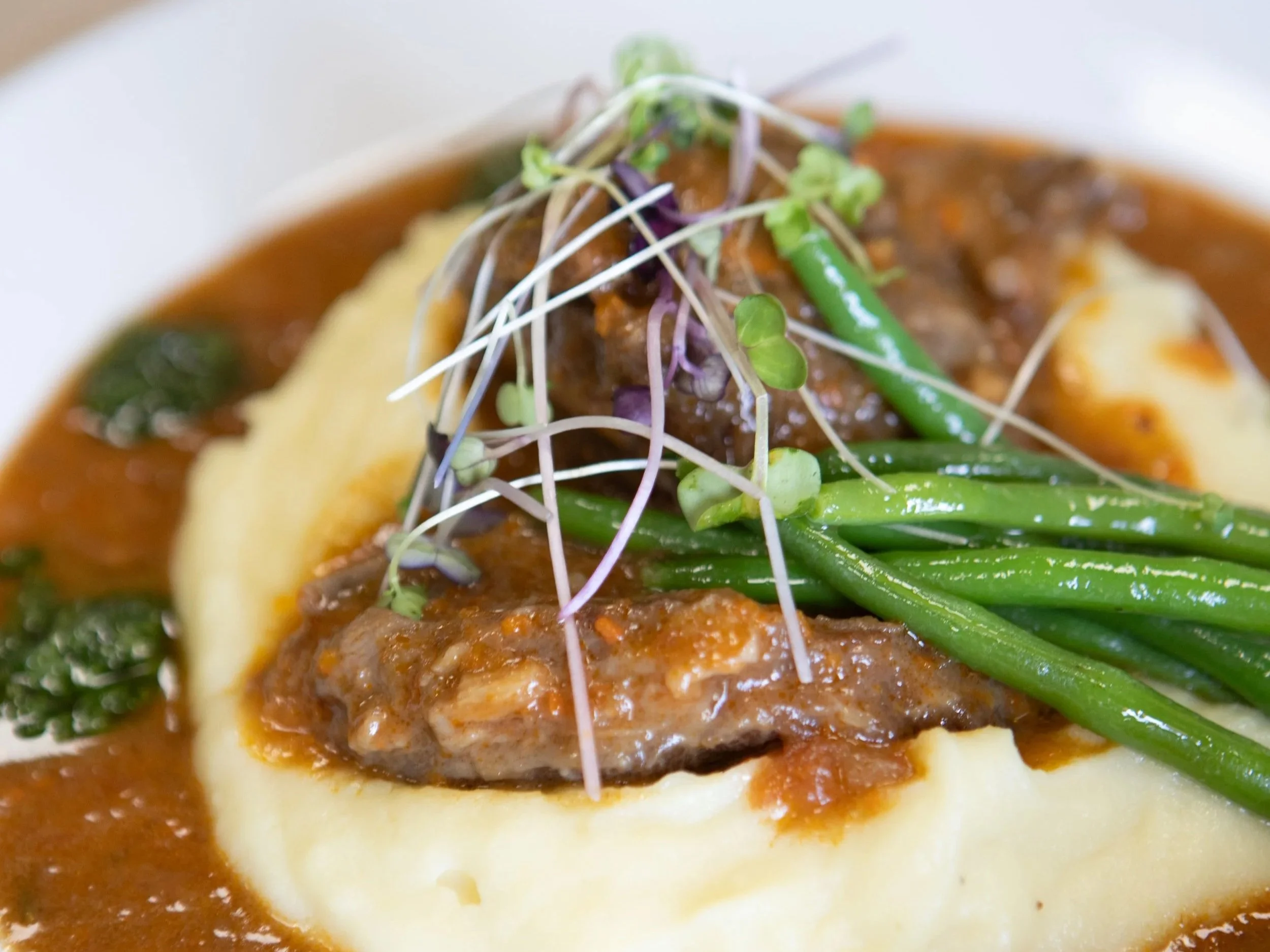
This is where a dish like Bistek becomes especially meaningful. Filipino bistek is often described through its Spanish-sounding name, but its flavor tells a fuller story. Thin slices of beef, soy sauce, calamansi or citrus, onions cooked until tender and sweet. It carries the memory of Spanish naming, Chinese seasoning, and Filipino instinct. It is bright, salty, savory, and deeply homegrown. At Rang’s Cocina Moderne, Bistek becomes part of a chef-driven dining experience in Las Vegas, but its emotional center remains familiar: beef, onions, citrus, soy, and the unmistakable comfort of a dish passed down because it works.
So much of Filipino cooking is built on this kind of layering. It is historical without announcing itself as history. It is personal before it is academic. A family recipe does not pause to explain colonization, trade, or migration. It simply asks whether there is enough garlic.
Garlic may be the most reliable bridge between Filipino, Spanish, and Italian cuisine. It is rarely decorative. It is infrastructure. In Filipino cooking, garlic appears in adobo, sinangag, bistek, pancit, stews, marinades, dipping sauces, and fried dishes. In Spanish cooking, it perfumes olive oil, anchors sofrito, seasons seafood, deepens stews, and appears generously in sauces and tapas. In Italian cooking, garlic is treated with both reverence and restraint, used to begin pasta sauces, flavor seafood, enrich vegetables, and build the warmth of a dish from the first minute of cooking.
Onions follow closely behind. They soften the edges of acidity. They bring sweetness to meat. They deepen tomato sauces. They turn simple cooking into something rounded and lived-in. Tomatoes, too, became one of the great connectors: introduced through colonial and trade histories, embraced across continents, and transformed into sauces, stews, braises, and family staples.
A tomato in an Italian sauce, a tomato in a Spanish sofrito, and a tomato in Filipino menudo or afritada may live in different recipes, but they answer the same need. They bring body. They bring color. They bring acidity that can be softened by time.
This is why the connection between Filipino food, Spanish cuisine, and Italian cuisine feels so intuitive at Rang’s Cocina Moderne. Chef Rang is working with traditions that already share a vocabulary.
The Pesto Crusted Salmon is one of those dishes that reveals how easily the conversation can happen. Pesto belongs to the Italian imagination: basil, nuts, oil, garlic, cheese, and salt worked into something fragrant and concentrated. Salmon speaks to a more contemporary global table, especially in a city like Las Vegas, where diners arrive with wide culinary references and an appetite for dishes that feel both familiar and composed. Through Chef Rang’s lens, pesto is not just an Italian marker. It becomes another expression of herbs, fat, texture, and seafood, ideas that Filipino and Spanish cooking also understand well.
Seafood is especially important in this conversation. The Philippines is an archipelago. Its food is shaped by water. Fish, shellfish, crab, squid, shrimp, and small briny ingredients appear across regional cooking, from grilled fish and kinilaw to crab fat, dried fish, seafood stews, and pancit enriched by the sea. Spanish cuisine has its own coastal soul, from paella and bacalao to gambas, anchovies, clams, and fish cooked simply with oil and garlic. Italian cuisine, particularly along the coasts, shares that same devotion to seafood treated with respect rather than excess.
This is where a dish like Aligue Pasta becomes almost inevitable.
Aligue, the rich crab fat treasured in Filipino cooking, has the intensity of the sea in concentrated form. It is luxurious, deeply savory, and unmistakably Filipino. Pasta gives it a structure that feels Italian, while garlic, olive oil, and a measured hand allow it to move without losing itself. The result is not a dish trying to prove that Filipino and Italian flavors can coexist. They already do. Crab, garlic, fat, noodles, salt, and heat belong to a shared coastal imagination.
Carbonara sits in the same broader story. In Italian cooking, carbonara is a lesson in richness, timing, and restraint, relying on egg, cheese, cured pork, and pasta water to create something silky without heaviness. In Filipino food culture, creamy pastas have long had a place at celebrations, birthdays, family gatherings, and holiday spreads, often adapted to local tastes and ingredients. When Carbonara appears within Chef Rang’s world, it carries both the Italian technique and the Filipino affection for pasta as party food, comfort food, and family food.
That affection matters. Filipino cuisine is often discussed through its most iconic dishes, but much of its power lives in the way food functions socially. A Filipino table is rarely sparse. Even modest meals have a sense of generosity. Someone is always encouraging another serving. Someone is always saving a plate. Someone is always asking if you ate.
Spanish and Italian table cultures understand this deeply. Meals are not treated as transactions. They stretch. They gather people into conversation. They are built around passing, sharing, lingering, refilling, and returning. The table becomes a place where family stories are repeated enough times to become part of the meal itself.
At Rang’s Cocina Moderne, this spirit of hospitality is central to the experience. The restaurant may live in Las Vegas, a city known for spectacle, speed, and constant reinvention, but Chef Rang’s cooking comes from a slower place. Her food carries the instinct of someone who understands that elegance does not have to erase warmth. A dish can be refined and still feel generous. A menu can be chef-driven and still feel rooted in the way people actually eat together.
That balance is one reason Filipino cuisine belongs so naturally in the larger conversation about modern dining. For years, Filipino food in the United States was often expected to explain itself before being allowed to simply be enjoyed. Diners wanted definitions. Writers reached for easy summaries. Restaurants were asked to represent an entire country through a handful of dishes.
But Filipino cuisine has never been one thing. It is regional, layered, multilingual, adaptive, practical, celebratory, and deeply personal. It changes from province to province, household to household, cook to cook. Its connection to Spanish cuisine is real. Its Chinese foundation is real. Its relationship with American influence, indigenous ingredients, Malay traditions, and global migration is also real. The cuisine is expansive because the history is expansive.
Chef Rang’s work reflects that expansiveness without turning it into a lecture.
Her food comes from lived inheritance. Chinese, Filipino, and Spanish heritage are not themes added to the menu after the fact. They are part of how she understands flavor. They inform the way soy can sit beside citrus, how chorizo can deepen a sauce, how seafood can carry richness, how garlic can begin almost anything, how an Italian form can hold a Filipino ingredient, how a Spanish memory can be translated through a modern plate.
Cashews offer one of the most beautiful examples of this kind of inheritance.
In the Philippines, Antipolo has long been associated with cashews. For many Filipino families, Antipolo cashews are more than a snack or ingredient. They are tied to pasalubong, pilgrimage, road trips, family visits, and the small edible souvenirs that carry a place back home. Cashews have a buttery sweetness and gentle richness that can move easily between savory and sweet dishes. They can thicken, garnish, soften, or surprise. They belong to the Filipino pantry in a way that feels humble and special at the same time.
Woven into the story of Rang’s Cocina Moderne, the Antipolo cashew is not just an ingredient. It is a reminder that food memory often comes from specific places. Not “the Philippines” in the abstract, but Antipolo. Not a generalized idea of heritage, but the taste of something brought home, wrapped carefully, shared at the table, and remembered years later.
That specificity is what keeps chef-driven dining honest.
The strongest cultural cooking does not come from broad gestures. It comes from details: the brand of soy sauce someone grew up with, the way onions were sliced at home, the chorizo used on holidays, the seafood dish that appeared when relatives visited, the pasta that became a family favorite because someone made it once and everyone kept asking for it again.
Recipes evolve this way. They move through repetition, substitution, necessity, memory, and affection. A grandmother adjusts a dish because an ingredient is missing. A mother changes the seasoning because her children prefer it that way. A daughter learns the original version, then carries it into another city, another kitchen, another era. By the time a dish reaches a restaurant table, it may hold generations of small decisions.
This is especially true in Filipino cooking, where exact measurements are often less important than knowing what the dish should feel like. The sourness should land here. The garlic should be stronger. The onions should be softer. The sauce should reduce a little more. The rice should be ready before the main dish is done. The food should taste like someone paid attention.
Spanish and Italian home cooking share that same intuitive knowledge. A sauce is done when it looks right. Dough is ready when the hands recognize it. Seafood needs only what it needs. A braise should not be rushed. Olive oil is both ingredient and gesture. The cook learns through watching, tasting, and being corrected by someone who learned the same way.
Slow cooking, in this sense, is not only about time. It is about trust.
Filipino adobo deepens as it sits. Spanish stews gain character as they simmer. Italian ragù asks for patience. Braised meats, tomato sauces, stocks, broths, and reductions all require the cook to believe that flavor develops when given space. At Rang’s Cocina Moderne, that philosophy appears across the menu in ways that feel natural rather than nostalgic. The dishes are modern, but the instincts are old.
Las Vegas is a fitting place for this kind of restaurant. The city has always been a meeting point for appetite, ambition, migration, and reinvention. It is home to hospitality workers, chefs, entrepreneurs, families, tourists, and communities who bring their own food memories with them. A Filipino restaurant in Las Vegas does not exist in isolation. It belongs to a city where dining is constantly being redefined, where people are increasingly seeking restaurants with a point of view, a sense of authorship, and a story that can be tasted without being overexplained.
Rang’s Cocina Moderne enters that landscape with a perspective that feels both personal and expansive. It is a Filipino restaurant in Las Vegas, but it is also a Spanish-inflected, Italian-aware, Chinese-rooted, chef-driven dining experience shaped by Chef Rang Tan’s own inheritance. That is its strength. The food does not flatten heritage into a single category. It lets the layers remain visible.
There is something deeply Filipino about that, too.
Filipino identity often holds multiplicity with ease. A dish can have a Spanish name, Chinese technique, local ingredients, and a family-specific method. A celebration can include pancit, spaghetti, lechon, lumpia, roast meats, seafood, cake, rice, and something an auntie brought without telling anyone in advance. The table makes room. The cuisine makes room.
Spanish and Italian food traditions share that same belief in abundance, even when expressed simply. A bowl of pasta can feed more people than expected. A seafood dish can become the center of the table. Bread, rice, sauce, and conversation can extend a meal. Hospitality is measured less by perfection than by whether people feel cared for.
This may be the truest connection among Filipino, Spanish, and Italian cuisine. Beyond ingredients, beyond history, beyond technique, there is a shared understanding that food is a form of welcome.
Chef Rang’s cooking lives in that welcome. Her menu is not an academic map of influence. It is a record of how flavor travels through family, culture, and instinct. Chorizo finds its way into Bolognese because smoke, spice, meat, and tomato already know each other. Aligue meets pasta because the sea and the noodle have always had something to say. Bistek carries soy, citrus, onion, and memory in a dish that feels both everyday and deeply personal. Carbonara and Pesto Crusted Salmon become part of the same table because Filipino dining has never been afraid of plurality.
The result is food that feels layered without feeling crowded. It honors where it comes from while allowing itself to keep moving.
That movement is the story of Filipino cuisine itself. Across generations, Filipino cooks have taken what history brought to their shores and transformed it through local taste, family wisdom, and a remarkable sense of adaptability. Spanish cuisine left ingredients, techniques, religious feast traditions, and a language of celebration. Chinese cooking gave noodles, soy, trade, and everyday savory depth. Italian cuisine, while not part of the same colonial history, shares enough culinary DNA through tomatoes, garlic, olive oil, seafood, cured meats, pasta, and table culture that the connection feels instinctive when handled with care.
At Rang’s Cocina Moderne, those connections are not presented as borrowed ideas. They are part of Chef Rang Tan’s culinary identity. They belong to her story, her palate, and the kind of hospitality she brings to Las Vegas.
The beauty of this food is that it does not need to choose one lineage at the expense of another. It can be Filipino and Spanish. It can nod to Italy. It can carry Chinese influence. It can feel modern while still remembering the older ways. It can belong to a restaurant dining room and still carry the warmth of a family table.
That is why Filipino food naturally connects with Spanish and Italian cuisine. Because the bridges were already there: in the garlic, in the onions, in the tomatoes, in the olive oil, in the seafood, in the slow sauces, in the chorizo, in the soy, in the cashews from Antipolo, in the recipes that traveled through generations before arriving on a plate.
Chef Rang simply knows how to listen to them.
Tradition Reimagined. Flavor Redefined.
