From Antipolo to Las Vegas: The Ingredients That Stayed
When people ask Chef Rang where her food comes from, the answer is usually larger than a single place.
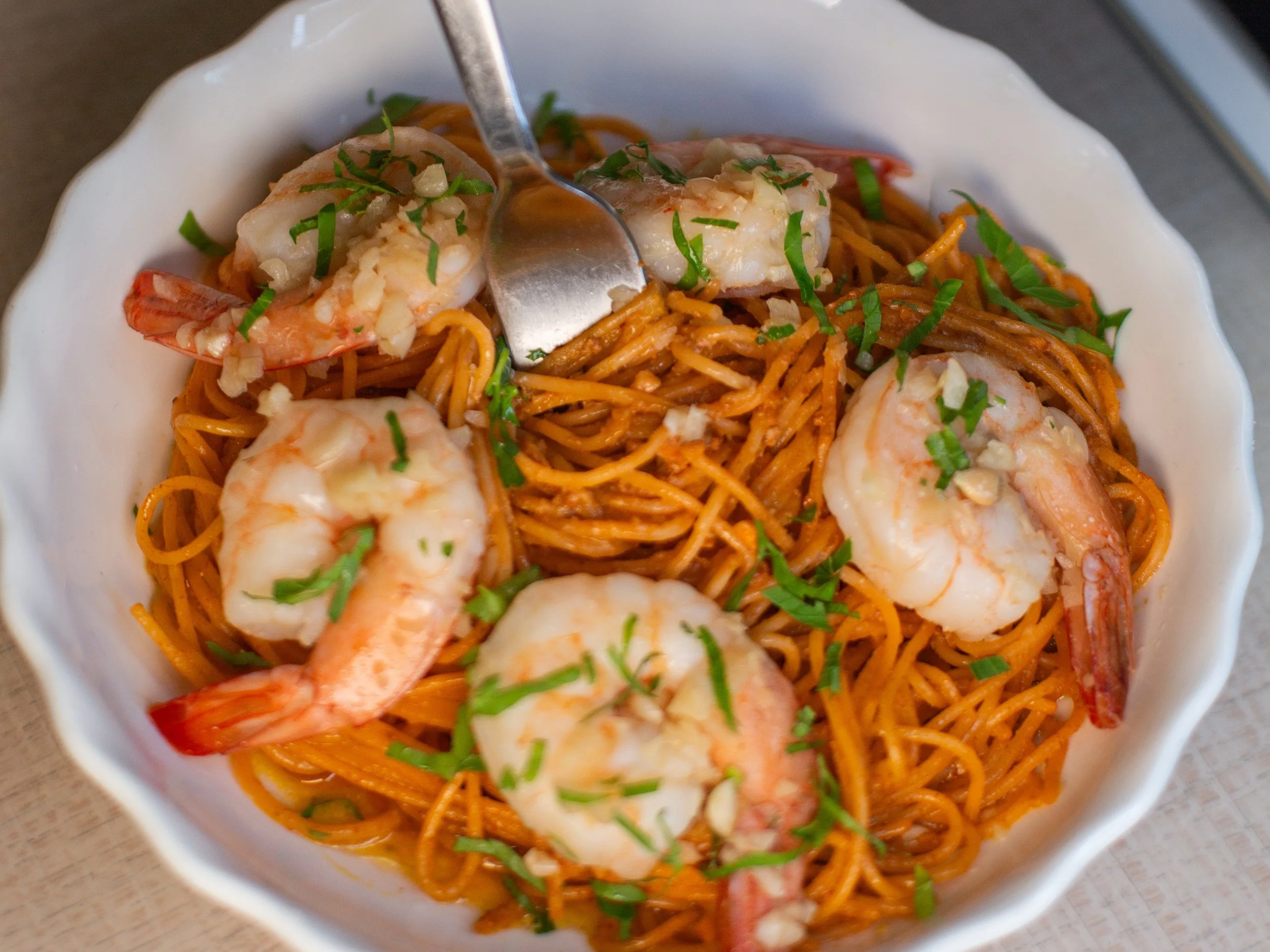
The menu at Rang’s Cocina Moderne moves between Filipino, Spanish, and Italian influences, often within the same meal. Guests come in for dishes like Aligue Pasta, Chorizo Bolognese, or the Pesto Crusted Salmon and immediately notice that the menu doesn’t fit neatly into one category.
But if you spend enough time around a kitchen, you start to realize that chefs rarely think in categories.
They think in ingredients.
Some become habits. Some become signatures. Some simply stay with you long enough that one day you realize they’ve followed you across cities, careers, and entire chapters of your life.
For Chef Rang, a few ingredients have done exactly that.
A Bag of Cashews on the Ride Home
Growing up in Rizal, Sundays often followed a familiar rhythm.
Church in Antipolo. The drive home. Roadside stalls selling fruit, snacks, and whatever happened to be in season that week.
Cashews were always around.
They weren’t tied to a special occasion or family recipe. They were simply part of the landscape, the kind of thing you bought without much thought. A snack for the drive home. Something to pass around the car.
Years later, when Chef Rang was working on what would become the Pesto Crusted Salmon, that memory returned in a surprisingly practical way.
Traditional pesto is built around pine nuts. It has been for generations. But standing in her kitchen, thinking through the flavors she wanted on the plate, cashews felt more natural.
The decision wasn’t made to reinvent the dish.
It wasn’t made to create a fusion moment.
It was simply the ingredient she wanted to use.
Today, those same cashews are blended with herbs and olive oil to create the crust that sits over the salmon. They give the pesto a softer texture and a gentler richness than pine nuts, but more importantly, they connect the dish to a memory that began thousands of miles away.
When guests order the salmon, they taste the result.
What they don’t see is the roadside stall in Antipolo that came first.
Chorizo and the Long Shadow of Spain
The story of Filipino food is impossible to tell without talking about Spain.
Not because Filipino cuisine is Spanish, but because centuries of influence leave traces behind. Sometimes those traces appear in language. Sometimes in architecture. Often, they appear on the table.
Few ingredients illustrate that more clearly than chorizo.
At Rang’s, Spanish chorizo finds its way into dishes because it belongs there naturally. Chef Rang grew up understanding it as part of the broader culinary conversation that shaped Filipino cooking.
You can see that most clearly in the Chorizo Bolognese.
At its foundation, it’s an Italian dish. Garlic, onions, tomato sauce, parmesan. The structure remains familiar.
But the Spanish chorizo changes the character of the sauce. As it slowly cooks down, it brings depth, richness, and a warmth that settles into every bite.
The result isn’t Spanish.
It isn’t Italian.
It’s simply a reflection of the way Chef Rang cooks.
There is no effort to force two cuisines together. They already arrived together.
The Ingredient That Rarely Gets Credit
Some ingredients become the focus of a dish.
Others do their work quietly. Soy has always been one of those ingredients.
It appears so frequently throughout Asian cooking that most people stop noticing it altogether. Yet remove it from a dish like Bistek and the entire foundation shifts.
For Chef Rang, soy isn’t interesting because it’s unique.
It’s interesting because it’s familiar.
It has always been there.
In Filipino cooking. In Chinese cooking. In home kitchens. In family meals. In dishes that don’t need much explanation because they’ve existed for generations.
At Rang’s, it appears in the Bistek alongside citrus and onions, helping create one of the most recognizable flavor combinations in Filipino cuisine.
The dish itself may be elevated with USDA Prime New York strip, but the flavor remains rooted in something much older than the restaurant.
And perhaps that’s what makes ingredients like soy so important.
They’re not there to announce themselves.
They’re there to make everything else possible.
What Follows a Chef
Restaurants are often described through their dishes.
The foie gras risotto.
The Aligue Pasta.
The Pulpo.
The Bistek.
The Pesto Crusted Salmon.
But long before those dishes existed, there were ingredients.
A bag of cashews bought after church.
Spanish chorizo finding its way into family cooking.
Soy simmering on the stove in kitchens that felt like home.
Those ingredients stayed.
They crossed oceans. They followed Chef Rang from the Philippines to Las Vegas. They found new expressions, new recipes, and new places on the menu.
And while the dishes continue to evolve, the ingredients remain surprisingly consistent.
Perhaps that’s because ingredients have a way of carrying more than flavor.
They carry habits.
Memories.
The places we come from.
And sometimes, if you’re lucky, they follow you all the way to a restaurant of your own.
